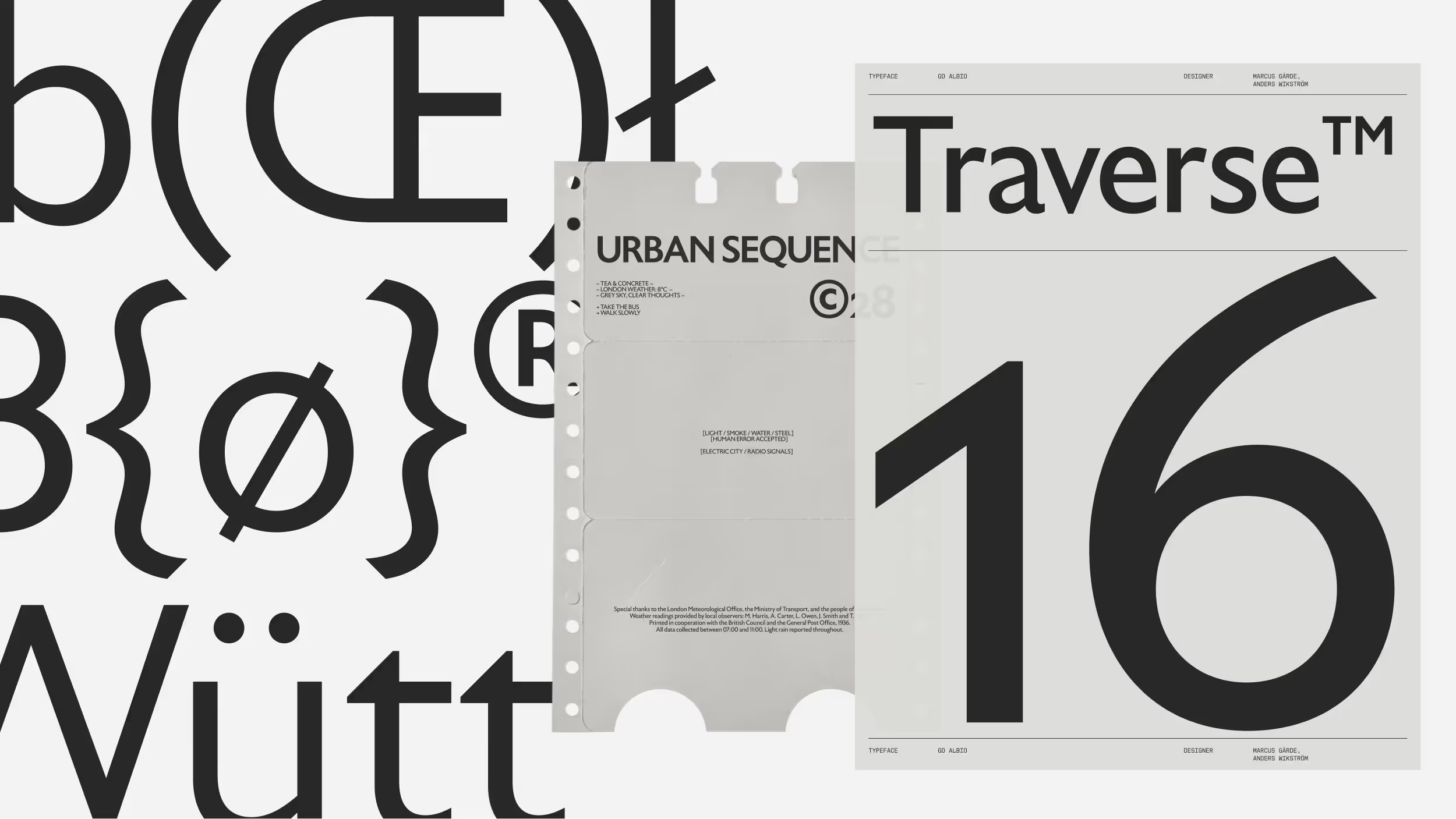
GD Albio
Gill Sans, originally created by Eric Gill (1882–1940), the British sculptor, typeface designer, and printmaker, stands as one of the most iconic expressions of early 20th-century British design. A central figure within the Arts and Crafts Movement and an early advocate of modernist principles in typography, Gill sought to bring human warmth and clarity to the mechanical age. Building on this legacy, GD Albio presents a contemporary reinterpretation of Gill’s vision. Rather than a strict revival, it refines the aesthetic spirit of Gill Sans through subtle recalibrations of proportion, rhythm, and form. These adjustments create a renewed sense of balance and poise, revealing the quiet elegance that lies at the heart of Gill’s original design. GD Albio continues Gill’s pursuit of simplicity and integrity, celebrating clarity without rigidity, craftsmanship without nostalgia. It is a typeface rooted in tradition yet shaped by a modern sensibility: a familiar presence, newly refined.
- Year
- 2025
- Designer(s)
- Marcus Gärde · Anders Wikström
- Style
- Humanist sans-serif
- Weights
- Regular · Medium · Semibold · Bold · Regular Italic · Medium Italic · Semibold Italic · Bold Italic
- Features
- Open type Alternates · Proportional Numbers · Tabular Numbers
- Languages
- 200+
- UPM
- 1000
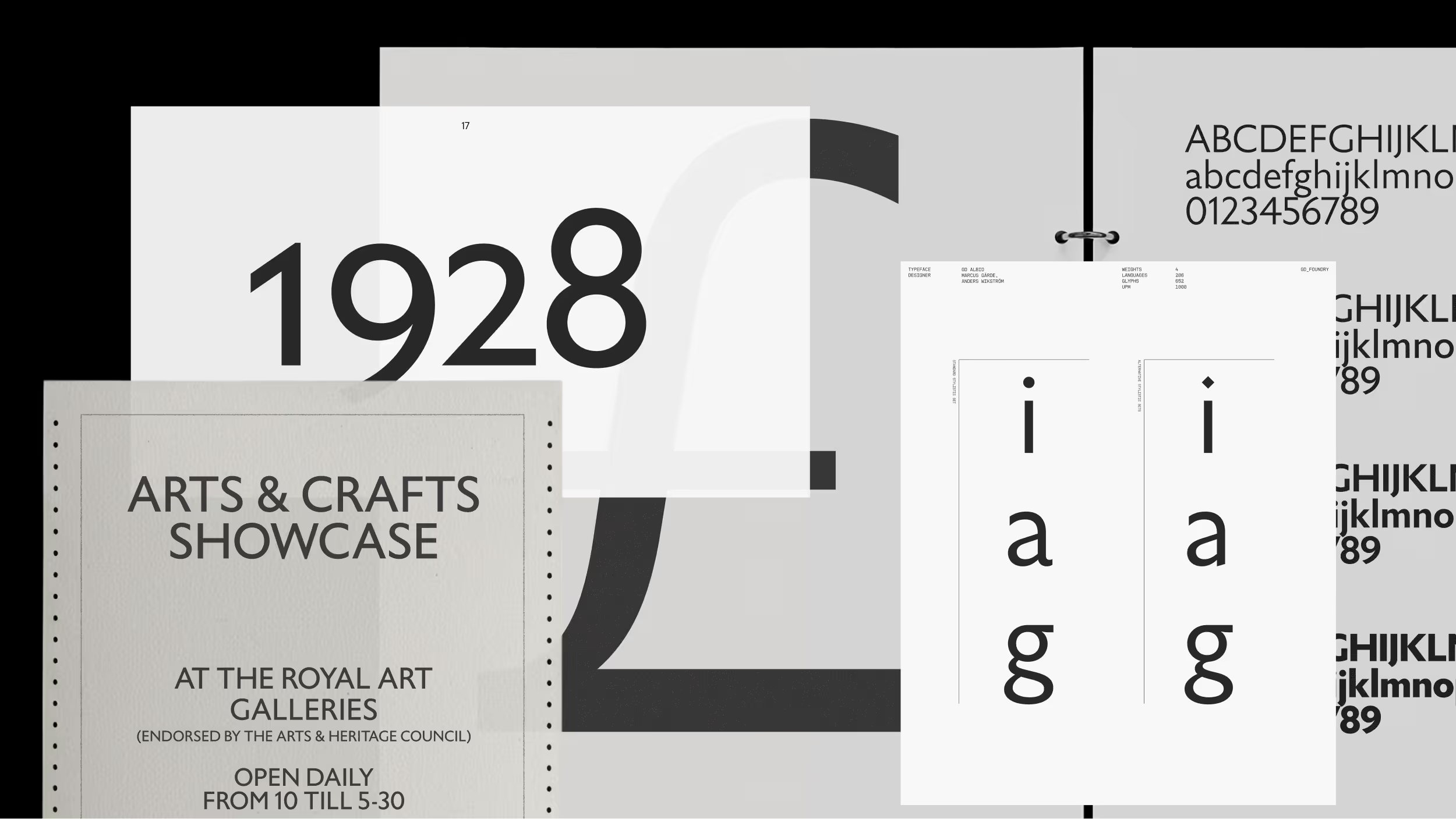
GD Albio – Contemporary Reinterpretation of Gill Sans
Gill Sans, originally created by Eric Gill (1882–1940), the British sculptor, typeface designer, and printmaker, stands as one of the most iconic expressions of early 20th-century British design. A central figure within the Arts and Crafts Movement and an early advocate of modernist principles in typography, Gill sought to bring human warmth and clarity to the mechanical age. Building on this legacy, GD Albio presents a contemporary reinterpretation of Gill’s vision. Rather than a strict revival, it refines the aesthetic spirit of Gill Sans through subtle recalibrations of proportion, rhythm, and form. These adjustments create a renewed sense of balance and poise, revealing the quiet elegance that lies at the heart of Gill’s original design. GD Albio continues Gill’s pursuit of simplicity and integrity, celebrating clarity without rigidity, craftsmanship without nostalgia. It is a typeface rooted in tradition yet shaped by a modern sensibility: a familiar presence, newly refined.
- Year
- 2025
- Designer(s)
- Marcus GärdeAnders Wikström
- Style
- Humanist sans-serif
- Weights
- RegularMediumSemiboldBoldRegular ItalicMedium ItalicSemibold ItalicBold Italic
- Features
- Open type AlternatesProportional NumbersTabular Numbers
- Languages
- 200+
- UPM
- 1000
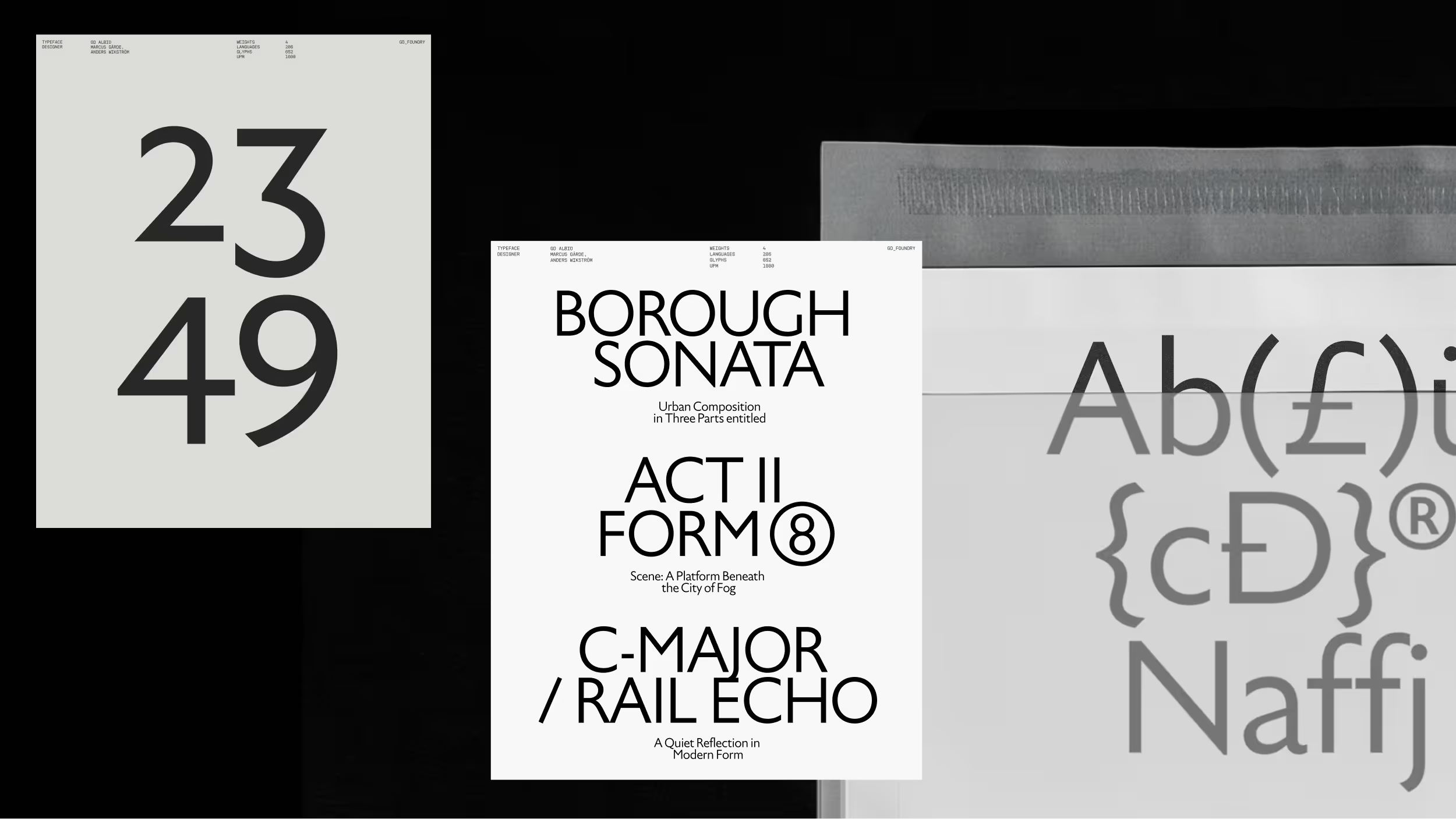
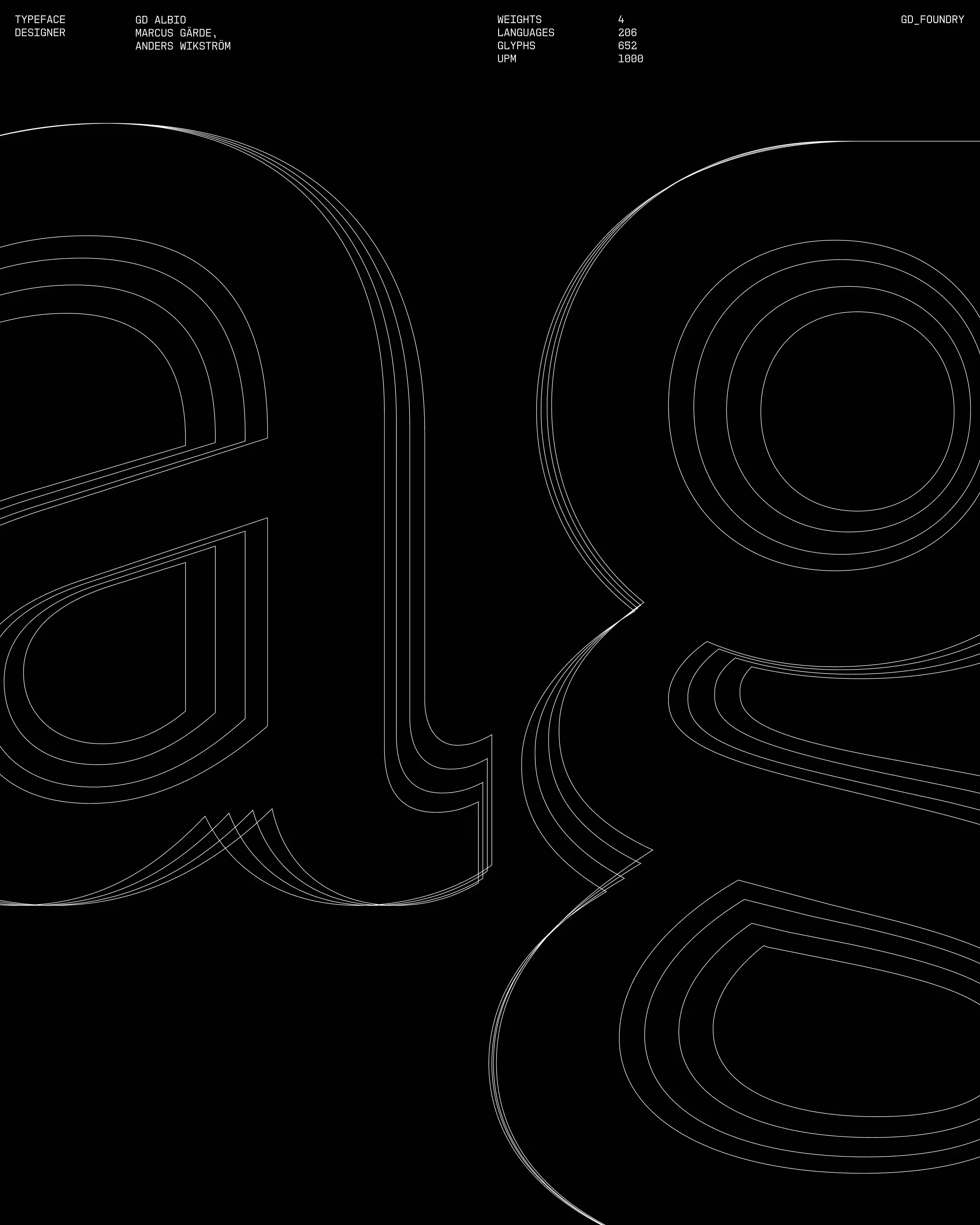
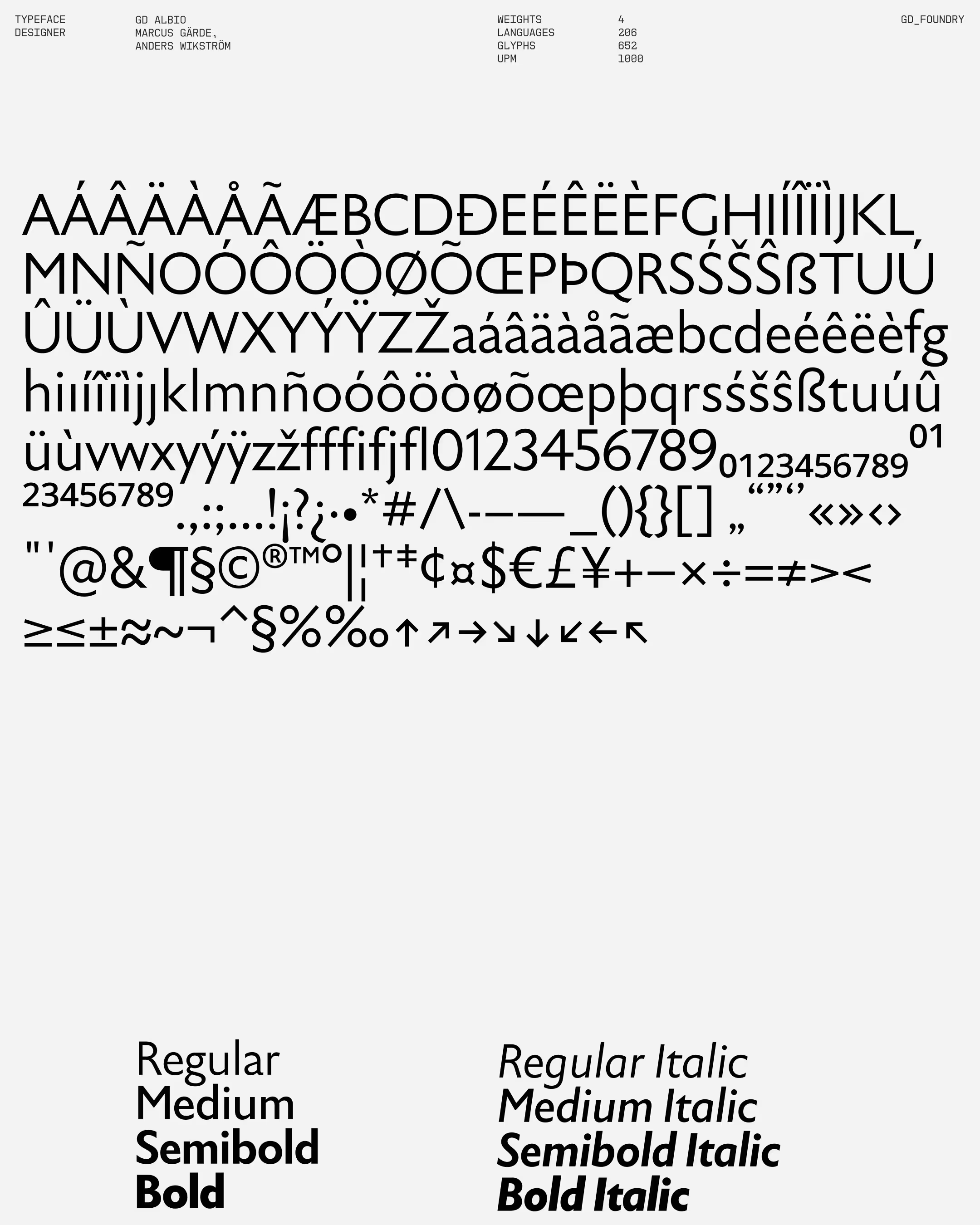
- GD Albio
- Weight
- Light
- wght
- 400
- Range
- 400–700
- Unicode name
- Latin Capital Letter A
- Unicode decimal
- 65
- Unicode hex
- 0041
- Block
- Basic Latin
Latin script
Acheron, Achinese, Acholi, Afar, Afrikaans, Alekano, Amahuaca, Amarakaeri, Amis, Anaang, Dongolawi (Andaandi), Anuta, Aragonese, Arbëreshë Albanian, Asháninka, Ashéninka (Perené, Pichis), Balinese, Banjar, Bari, Basque, Batak (Dairi, Karo, Mandailing, Simalungun, Toba), Bemba (Zambia), Bena (Tanzania), Bikol, Bislama, Oromo (Borana, Arsi, Guji, Eastern, West Central), Breton, Buginese, Candoshi-Shapra, Caquinte, Caribbean Hindustani, Cashibo-Cacataibo, Cebuano, Aymara (Central, Southern), Chachi, Chamorro, Chavacano, Chiga, Chiltepec Chinantec, Chokwe, Chuukese, Cimbrian, Cofán, Cook Islands Māori, Cornish, Corsican, Creek, Crimean Tatar, Croatian, Czech, Dehu, Dutch, Arrernte (Eastern), English, Faroese, Fijian, Filipino, Finnish, French, Friulian, Gagauz, Galician, Ganda, Garifuna, German, Albanian (Gheg, Tosk), Gilbertese, Gooniyandi, Gourmanchéma, Guadeloupean Creole French, Gusii, Haitian Creole, Hani, Hiligaynon, Hopi, Huastec, Hungarian, Iloko, Indonesian, Irish, Istro-Romanian, Italian, Ixcatlán Mazatec, Jamaican Creole English, Javanese, Jola-Fonyi, K’iche’, Kabuverdianu (Cape Verdean Creole), Kalaallisut (Greenlandic), Kalenjin, Kaonde, Karelian, Kashubian, Q’eqchi’ (Kekchí), Kenzi-Mattokki, Khasi, Kimbundu, Kinyarwanda, Kituba (DRC), Kongo, Konzo, Kven Finnish, Ladin, Ladino (Judeo-Spanish), Latgalian, Lithuanian, Lombard, Low German, Sorbian (Lower, Upper), Luba-Lulua, Luo (Kenya & Tanzania), Luxembourgish, Aromanian (Macedo-Romanian), Makonde, Malagasy, Malay (Standard, Malaysian), Maltese, Mandinka, Mankanya, Manx, Comorian (Maore, Ngazidja), Māori, Mapudungun, Marshallese, Matsés, Mauritian Creole, Meriam Mir, Meru, Mezquital Otomi, Minangkabau, Mohawk, Montenegrin, Murrinh-Patha, Mwani, Miskito, Naga Pidgin, Ndonga, Neapolitan, Niuean, Nobiin, Nomatsiguenga, Ndebele (North, South), Uzbek (Northern), Norwegian, Nyanja (Chichewa), Nyankole, Occitan, Ojitlán Chinantec, Orma, Oroqen, Palauan, Pampanga, Papantla Totonac, Papiamento, Pedi (Northern Sotho), Picard, Piedmontese, Pijin, Pintupi-Luritja, Pipil, Pohnpeian, Polish, Portuguese, Potawatomi, Purepecha, Romanian, Romansh, Rotokas, Rundi (Kirundi), Samoan, Sango, Sangu (Tanzania), Saramaccan, Sardinian, Scots, Scottish Gaelic, Secoya, Sena, Seri, Seselwa Creole French (Seychellois), Shawnee, Shipibo-Conibo, Shona, Sicilian, Silesian, Slovak, Slovenian, Soga, Somali, Soninke, Miao (Northern & Southern Qiandong), Sotho (Southern), Spanish, Sranan Tongo, Estonian, Latvian, Sundanese, Swahili, Swedish, Swiss German, Tagalog, Tahitian, Tedim Chin, Tetum (Dili), Tok Pisin, Tokelau, Tongan (Islands, Zambia), Tumbuka, Turkish, Turkmen, Tzeltal, Tzotzil, Uab Meto, Crioulo (Upper Guinea), Venetian, Veps, Võro, Walloon, Waray (Philippines), Warlpiri, Wayuu, Welsh, Abnaki (Western), Frisian (Western), Wiradjuri, Wolof, Xhosa, Yanesha’, Yao, Yucatec Maya, Zapotec, Zulu, Záparo.