GD Gaio Smooth
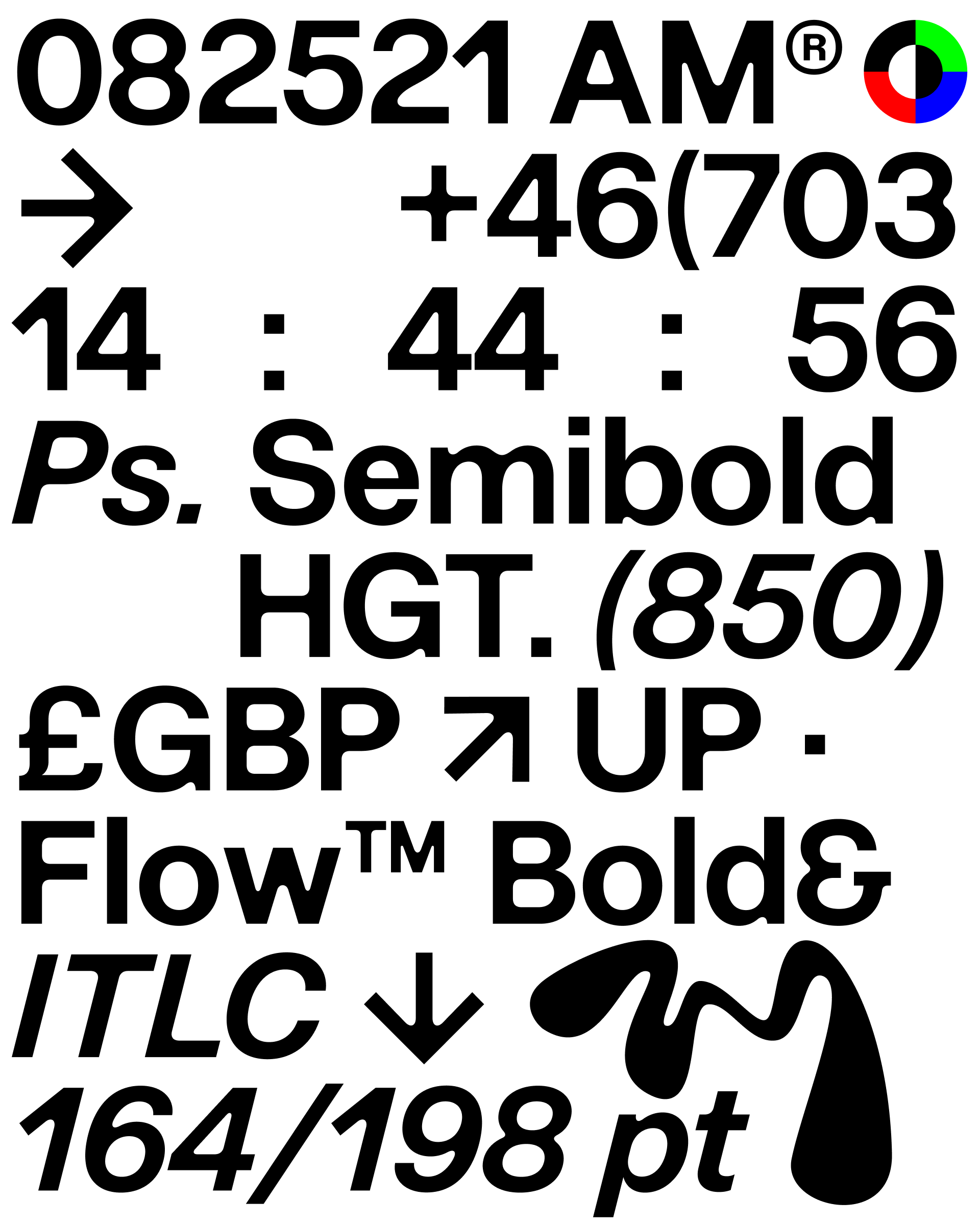
We took our very neutral GD Gaio and made it anything but neutral. By playing with the classic design principle of contrast, sharp edges meet soft, rounded corners to create a typeface with a strong and distinctive character. Applied irregularly and often asymmetrically, these contrasting details create a sense of playful tension, giving the typeface a bold, expressive personality while retaining the underlying clarity of GD Gaio. Nothing is quite where you expect it to be. And that’s the point. GD Gaio Smooth is anything but neutral. It’s expressive, restless and deliberately imperfect, finding character in the space between rules.
- Year
- 2026
- Designer(s)
- Marcus Gärde · Jonas Holm · Anders Wikström
- Style
- Neo-Grotesk
- Weights
- Regular · Medium · Semibold · Bold · Extra Bold · Black · Regular Italic · Medium Italic · Semibold Italic · Bold Italic · Extra Bold Italic · Black Italic
- Features
- Open type Alternates · Proportional Numbers · Tabular Numbers
- Languages
- 200+
- UPM
- 2816
GD Gaio Smooth – Not so Neutral
We took our very neutral GD Gaio and made it anything but neutral. By playing with the classic design principle of contrast, sharp edges meet soft, rounded corners to create a typeface with a strong and distinctive character. Applied irregularly and often asymmetrically, these contrasting details create a sense of playful tension, giving the typeface a bold, expressive personality while retaining the underlying clarity of GD Gaio. Nothing is quite where you expect it to be. And that’s the point. GD Gaio Smooth is anything but neutral. It’s expressive, restless and deliberately imperfect, finding character in the space between rules.
- Year
- 2026
- Designer(s)
- Marcus GärdeJonas HolmAnders Wikström
- Style
- Neo-Grotesk
- Weights
- RegularMediumSemiboldBoldExtra BoldBlackRegular ItalicMedium ItalicSemibold ItalicBold ItalicExtra Bold ItalicBlack Italic
- Features
- Open type AlternatesProportional NumbersTabular Numbers
- Languages
- 200+
- UPM
- 2816
- GD Gaio Smooth
- Weight
- Light
- wght
- 400
- Range
- 400–900
- Unicode name
- Latin Capital Letter A
- Unicode decimal
- 65
- Unicode hex
- 0041
- Block
- Basic Latin
Latin script
Acheron, Achinese, Acholi, Afar, Afrikaans, Alekano, Amahuaca, Amarakaeri, Amis, Anaang, Dongolawi (Andaandi), Anuta, Aragonese, Arbëreshë Albanian, Asháninka, Ashéninka (Perené, Pichis), Balinese, Banjar, Bari, Basque, Batak (Dairi, Karo, Mandailing, Simalungun, Toba), Bemba (Zambia), Bena (Tanzania), Bikol, Bislama, Oromo (Borana, Arsi, Guji, Eastern, West Central), Breton, Buginese, Candoshi-Shapra, Caquinte, Caribbean Hindustani, Cashibo-Cacataibo, Cebuano, Aymara (Central, Southern), Chachi, Chamorro, Chavacano, Chiga, Chiltepec Chinantec, Chokwe, Chuukese, Cimbrian, Cofán, Cook Islands Māori, Cornish, Corsican, Creek, Crimean Tatar, Croatian, Czech, Dehu, Dutch, Arrernte (Eastern), English, Faroese, Fijian, Filipino, Finnish, French, Friulian, Gagauz, Galician, Ganda, Garifuna, German, Albanian (Gheg, Tosk), Gilbertese, Gooniyandi, Gourmanchéma, Guadeloupean Creole French, Gusii, Haitian Creole, Hani, Hiligaynon, Hopi, Huastec, Hungarian, Iloko, Indonesian, Irish, Istro-Romanian, Italian, Ixcatlán Mazatec, Jamaican Creole English, Javanese, Jola-Fonyi, K’iche’, Kabuverdianu (Cape Verdean Creole), Kalaallisut (Greenlandic), Kalenjin, Kaonde, Karelian, Kashubian, Q’eqchi’ (Kekchí), Kenzi-Mattokki, Khasi, Kimbundu, Kinyarwanda, Kituba (DRC), Kongo, Konzo, Kven Finnish, Ladin, Ladino (Judeo-Spanish), Latgalian, Lithuanian, Lombard, Low German, Sorbian (Lower, Upper), Luba-Lulua, Luo (Kenya & Tanzania), Luxembourgish, Aromanian (Macedo-Romanian), Makonde, Malagasy, Malay (Standard, Malaysian), Maltese, Mandinka, Mankanya, Manx, Comorian (Maore, Ngazidja), Māori, Mapudungun, Marshallese, Matsés, Mauritian Creole, Meriam Mir, Meru, Mezquital Otomi, Minangkabau, Mohawk, Montenegrin, Murrinh-Patha, Mwani, Miskito, Naga Pidgin, Ndonga, Neapolitan, Niuean, Nobiin, Nomatsiguenga, Ndebele (North, South), Uzbek (Northern), Norwegian, Nyanja (Chichewa), Nyankole, Occitan, Ojitlán Chinantec, Orma, Oroqen, Palauan, Pampanga, Papantla Totonac, Papiamento, Pedi (Northern Sotho), Picard, Piedmontese, Pijin, Pintupi-Luritja, Pipil, Pohnpeian, Polish, Portuguese, Potawatomi, Purepecha, Romanian, Romansh, Rotokas, Rundi (Kirundi), Samoan, Sango, Sangu (Tanzania), Saramaccan, Sardinian, Scots, Scottish Gaelic, Secoya, Sena, Seri, Seselwa Creole French (Seychellois), Shawnee, Shipibo-Conibo, Shona, Sicilian, Silesian, Slovak, Slovenian, Soga, Somali, Soninke, Miao (Northern & Southern Qiandong), Sotho (Southern), Spanish, Sranan Tongo, Estonian, Latvian, Sundanese, Swahili, Swedish, Swiss German, Tagalog, Tahitian, Tedim Chin, Tetum (Dili), Tok Pisin, Tokelau, Tongan (Islands, Zambia), Tumbuka, Turkish, Turkmen, Tzeltal, Tzotzil, Uab Meto, Crioulo (Upper Guinea), Venetian, Veps, Võro, Walloon, Waray (Philippines), Warlpiri, Wayuu, Welsh, Abnaki (Western), Frisian (Western), Wiradjuri, Wolof, Xhosa, Yanesha’, Yao, Yucatec Maya, Zapotec, Zulu, Záparo.