GD Praxio
GD Praxio began as a bespoke typeface for Praxis, a medtech brand at the intersection of medicine and technology. The task was demanding: a typeface that could carry long, complex medical content on screen, and still speak with a voice of its own. It had to feel clinical, but human. Authoritative, without becoming institutional.
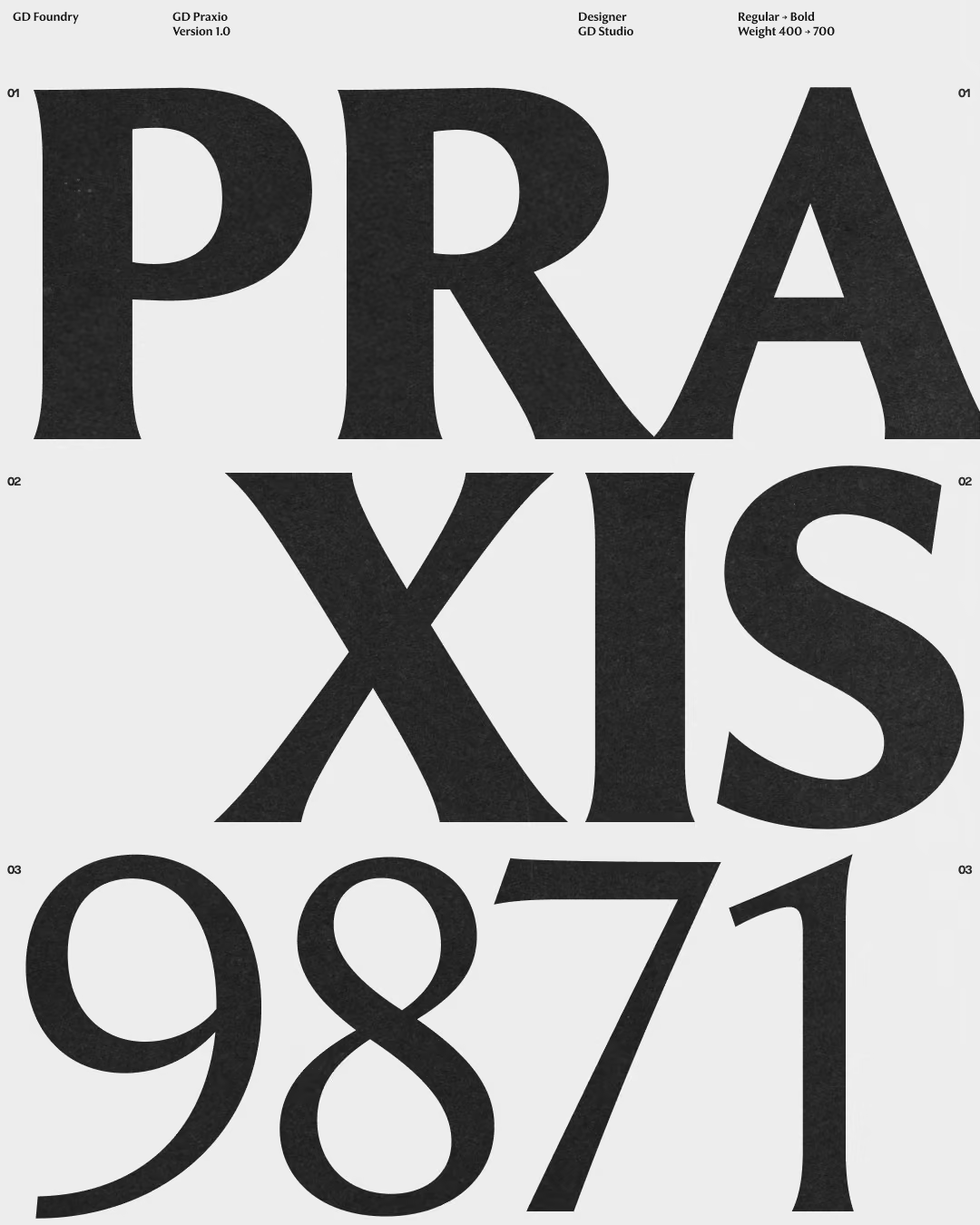
The answer was a humanist semi-serif. Its roots are in the humanist tradition, with letterforms shaped by the hand rather than the grid. The serifs are reduced to their essentials, just enough to guide the eye along the line without adding ornament. Open forms, considered proportions and subtle stroke modulation create a natural reading rhythm that stays comfortable over long passages, even at small sizes.
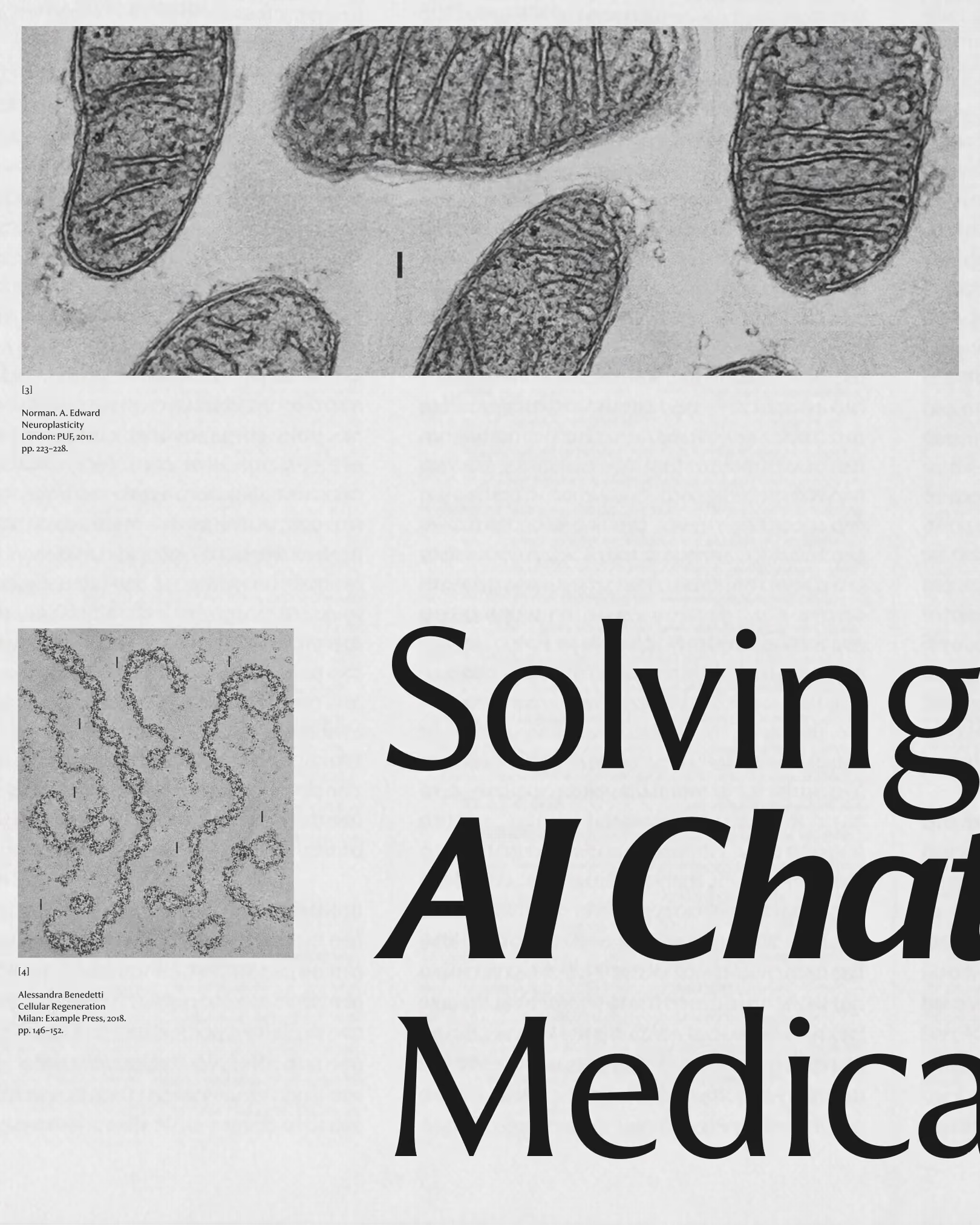
The result sits between two worlds. GD Praxio has the precision and clarity of a sans serif and the warmth and character of a serif. It’s confident in a headline and calm in running text, and it’s made for the screen, where most reading happens today.
Now we’re making it available to everyone. GD Praxio is for brands and publications that need to be trusted and understood, without sounding like everyone else.
- Year
- 2026
- Designer(s)
- Marcus Gärde · Anders Wikström
- Style
- Semi-serif
- Weights
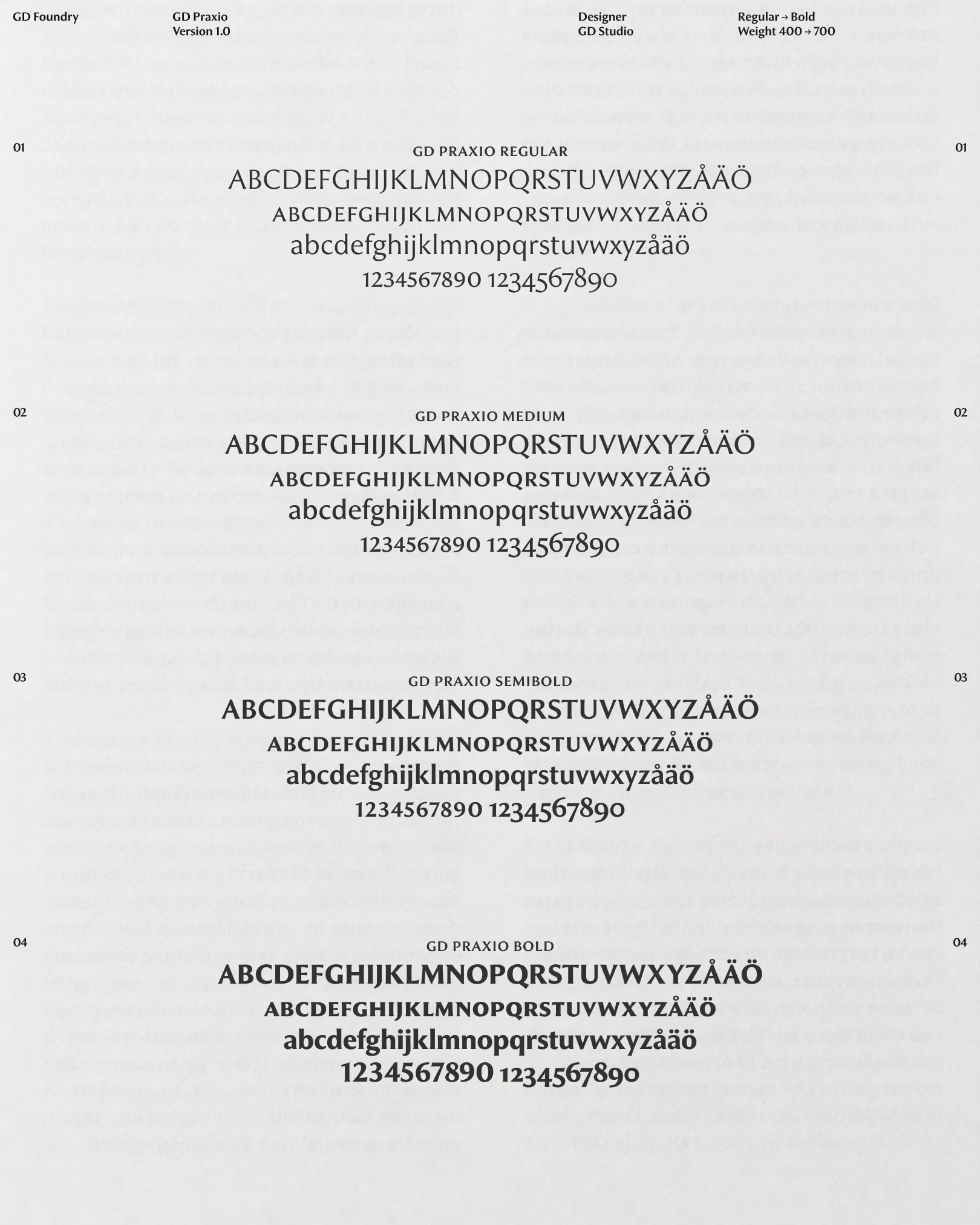
- Regular · Medium · Semibold · Bold · Regular Italic · Medium Italic · Semibold Italic · Bold Italic
- Features
- Open type Alternates · Proportional Numbers · Tabular Numbers
- Languages
- 200+
- UPM
- 1000
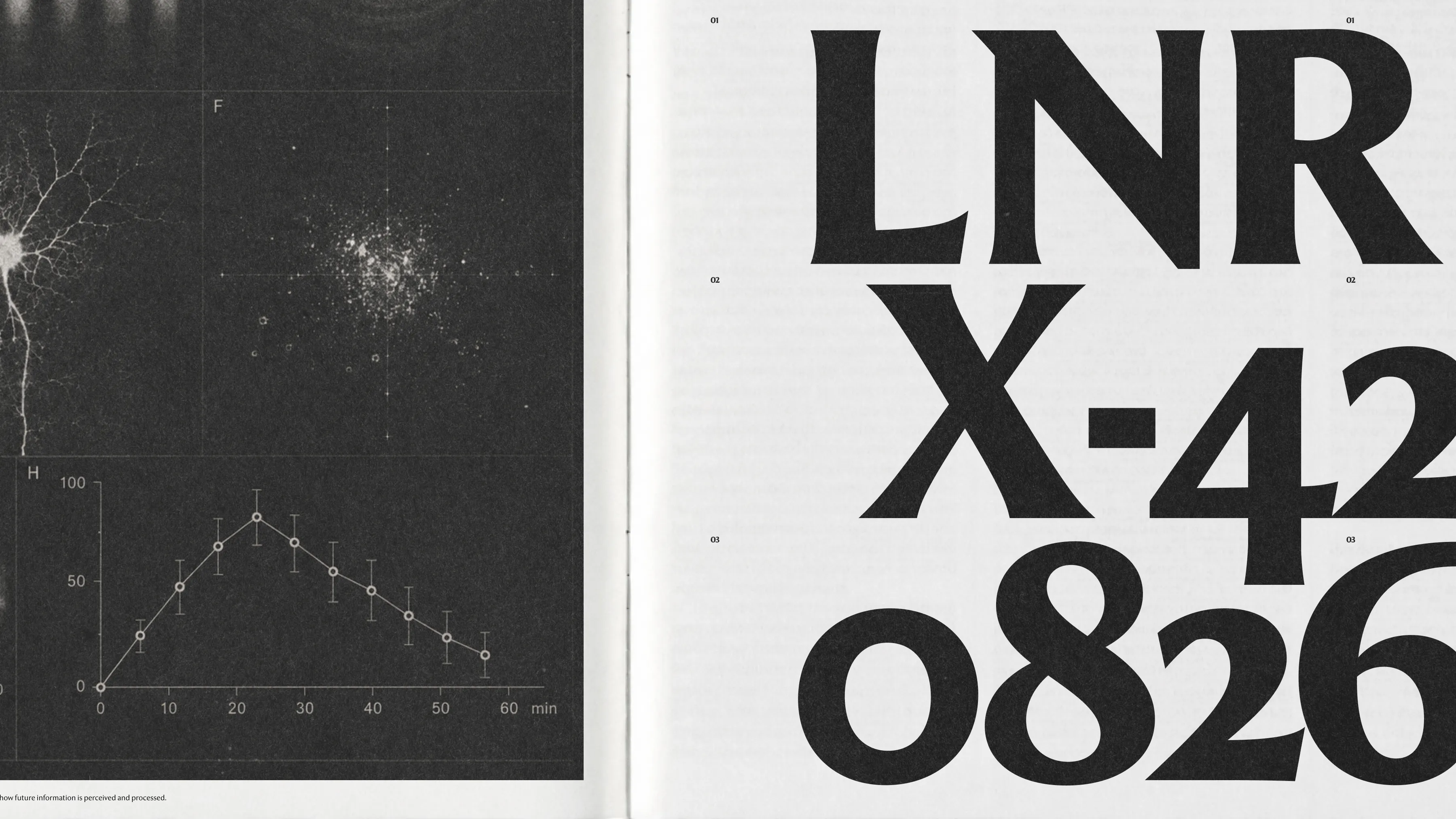
GD Praxio – Clinical clarity, human warmth.
GD Praxio began as a bespoke typeface for Praxis, a medtech brand at the intersection of medicine and technology. The task was demanding: a typeface that could carry long, complex medical content on screen, and still speak with a voice of its own. It had to feel clinical, but human. Authoritative, without becoming institutional.
The answer was a humanist semi-serif. Its roots are in the humanist tradition, with letterforms shaped by the hand rather than the grid. The serifs are reduced to their essentials, just enough to guide the eye along the line without adding ornament. Open forms, considered proportions and subtle stroke modulation create a natural reading rhythm that stays comfortable over long passages, even at small sizes.
The result sits between two worlds. GD Praxio has the precision and clarity of a sans serif and the warmth and character of a serif. It’s confident in a headline and calm in running text, and it’s made for the screen, where most reading happens today.
Now we’re making it available to everyone. GD Praxio is for brands and publications that need to be trusted and understood, without sounding like everyone else.
- Year
- 2026
- Designer(s)
- Marcus GärdeAnders Wikström
- Style
- Semi-serif
- Weights
- RegularMediumSemiboldBoldRegular ItalicMedium ItalicSemibold ItalicBold Italic
- Features
- Open type AlternatesProportional NumbersTabular Numbers
- Languages
- 200+
- UPM
- 1000
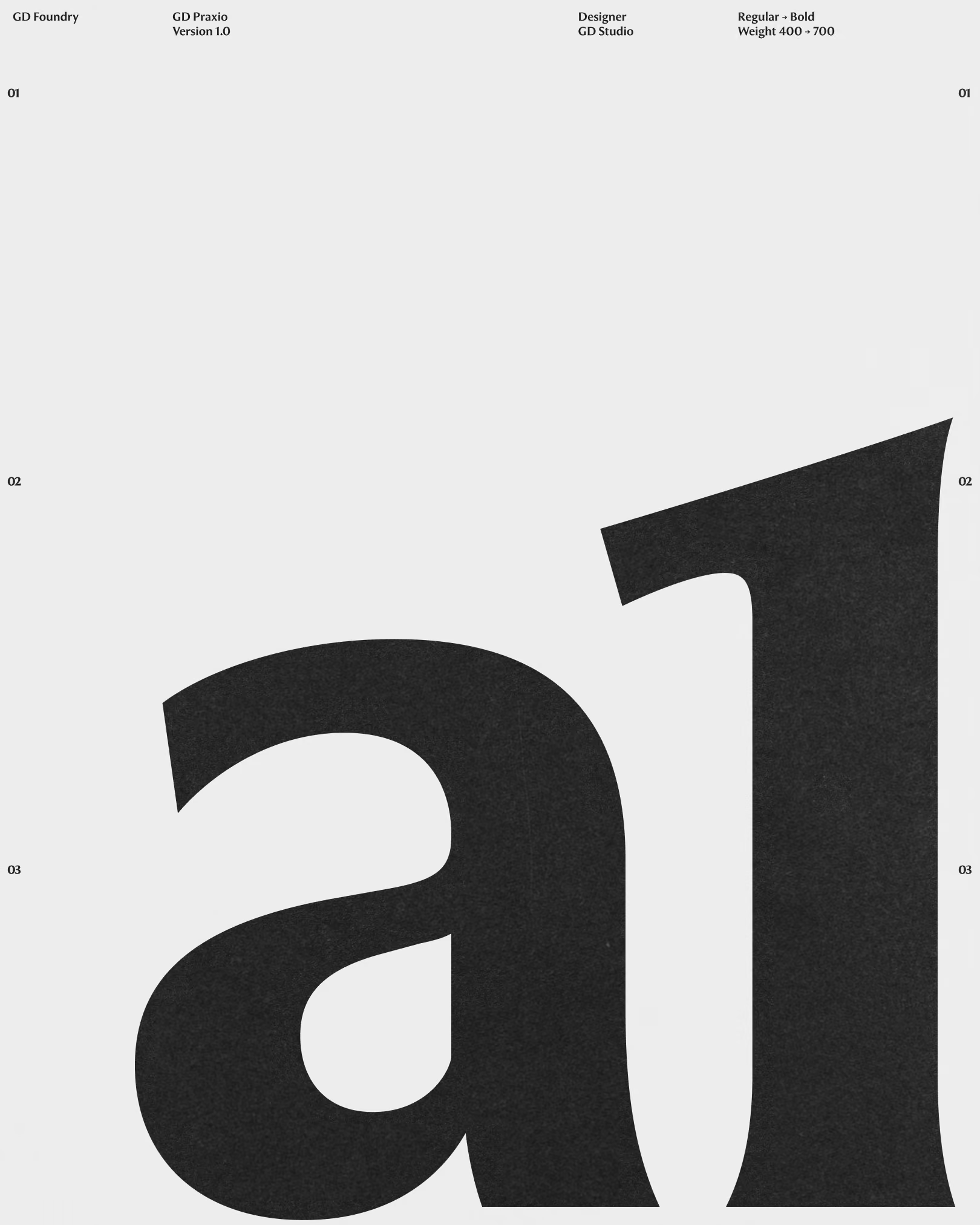
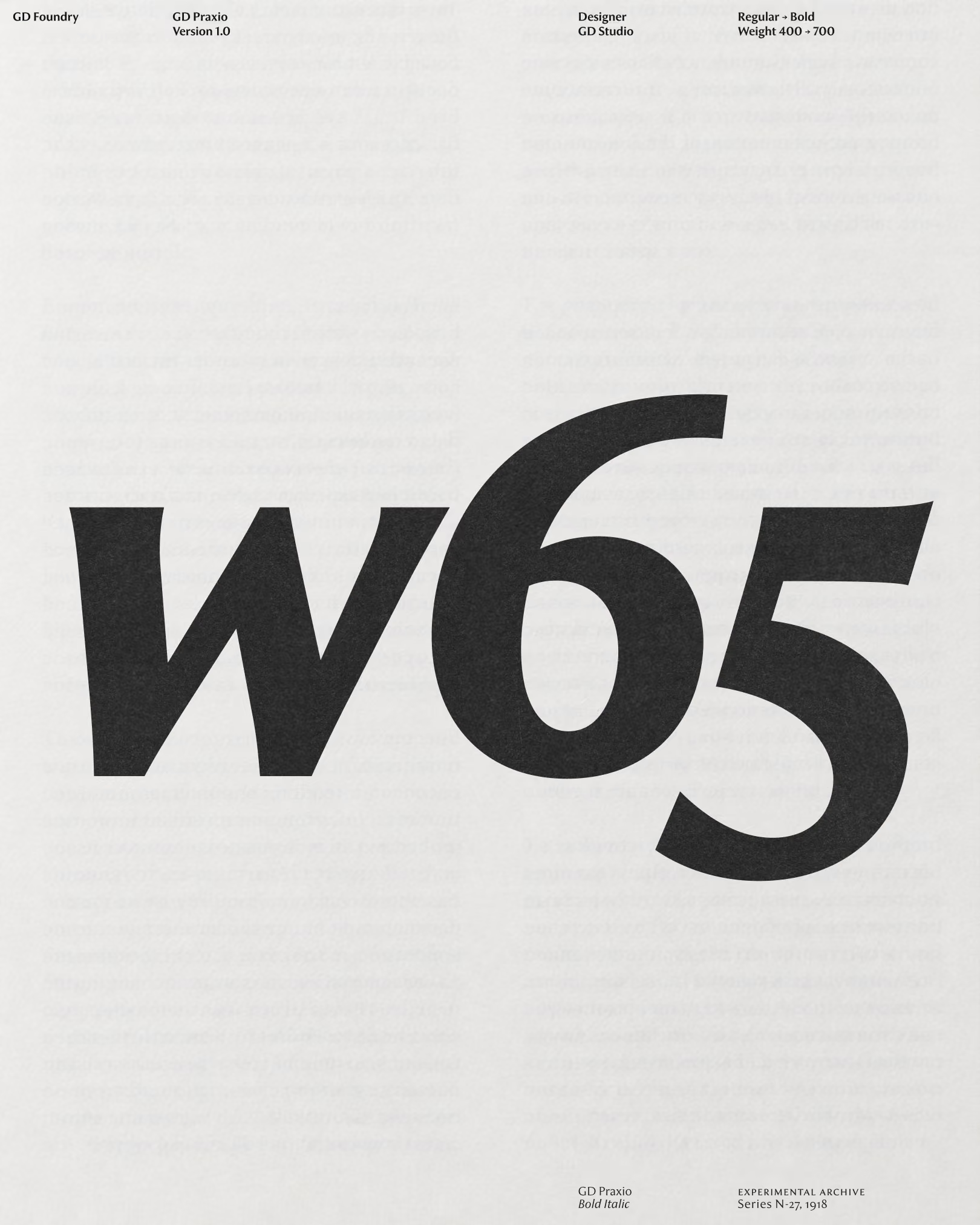
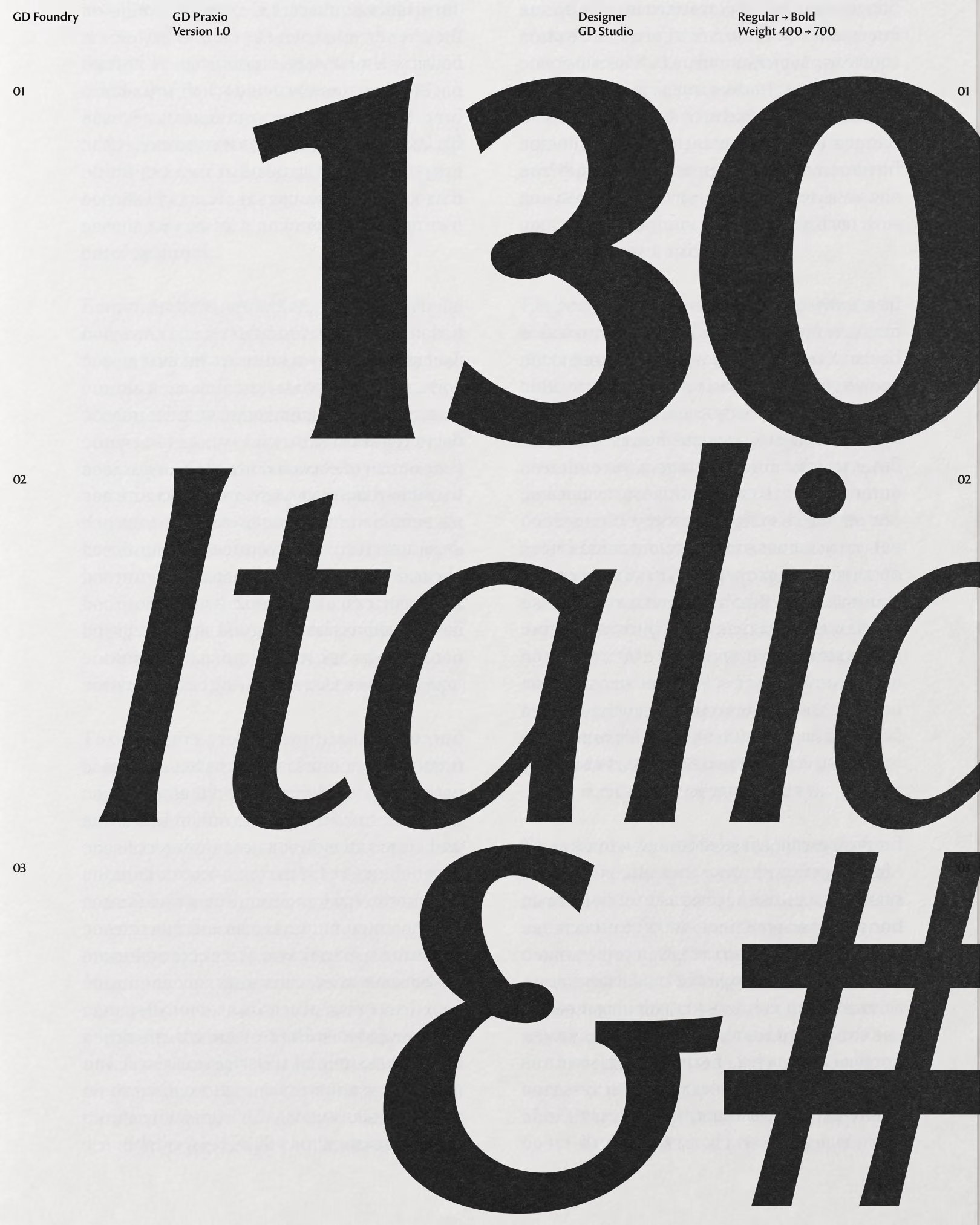
- GD Praxio
- Weight
- Light
- wght
- 400
- Range
- 400–700
- Unicode name
- Latin Capital Letter A
- Unicode decimal
- 65
- Unicode hex
- 0041
- Block
- Basic Latin
Latin script
Acheron, Achinese, Acholi, Afar, Afrikaans, Alekano, Amahuaca, Amarakaeri, Amis, Anaang, Dongolawi (Andaandi), Anuta, Aragonese, Arbëreshë Albanian, Asháninka, Ashéninka (Perené, Pichis), Balinese, Banjar, Bari, Basque, Batak (Dairi, Karo, Mandailing, Simalungun, Toba), Bemba (Zambia), Bena (Tanzania), Bikol, Bislama, Oromo (Borana, Arsi, Guji, Eastern, West Central), Breton, Buginese, Candoshi-Shapra, Caquinte, Caribbean Hindustani, Cashibo-Cacataibo, Cebuano, Aymara (Central, Southern), Chachi, Chamorro, Chavacano, Chiga, Chiltepec Chinantec, Chokwe, Chuukese, Cimbrian, Cofán, Cook Islands Māori, Cornish, Corsican, Creek, Crimean Tatar, Croatian, Czech, Dehu, Dutch, Arrernte (Eastern), English, Faroese, Fijian, Filipino, Finnish, French, Friulian, Gagauz, Galician, Ganda, Garifuna, German, Albanian (Gheg, Tosk), Gilbertese, Gooniyandi, Gourmanchéma, Guadeloupean Creole French, Gusii, Haitian Creole, Hani, Hiligaynon, Hopi, Huastec, Hungarian, Iloko, Indonesian, Irish, Istro-Romanian, Italian, Ixcatlán Mazatec, Jamaican Creole English, Javanese, Jola-Fonyi, K’iche’, Kabuverdianu (Cape Verdean Creole), Kalaallisut (Greenlandic), Kalenjin, Kaonde, Karelian, Kashubian, Q’eqchi’ (Kekchí), Kenzi-Mattokki, Khasi, Kimbundu, Kinyarwanda, Kituba (DRC), Kongo, Konzo, Kven Finnish, Ladin, Ladino (Judeo-Spanish), Latgalian, Lithuanian, Lombard, Low German, Sorbian (Lower, Upper), Luba-Lulua, Luo (Kenya & Tanzania), Luxembourgish, Aromanian (Macedo-Romanian), Makonde, Malagasy, Malay (Standard, Malaysian), Maltese, Mandinka, Mankanya, Manx, Comorian (Maore, Ngazidja), Māori, Mapudungun, Marshallese, Matsés, Mauritian Creole, Meriam Mir, Meru, Mezquital Otomi, Minangkabau, Mohawk, Montenegrin, Murrinh-Patha, Mwani, Miskito, Naga Pidgin, Ndonga, Neapolitan, Niuean, Nobiin, Nomatsiguenga, Ndebele (North, South), Uzbek (Northern), Norwegian, Nyanja (Chichewa), Nyankole, Occitan, Ojitlán Chinantec, Orma, Oroqen, Palauan, Pampanga, Papantla Totonac, Papiamento, Pedi (Northern Sotho), Picard, Piedmontese, Pijin, Pintupi-Luritja, Pipil, Pohnpeian, Polish, Portuguese, Potawatomi, Purepecha, Romanian, Romansh, Rotokas, Rundi (Kirundi), Samoan, Sango, Sangu (Tanzania), Saramaccan, Sardinian, Scots, Scottish Gaelic, Secoya, Sena, Seri, Seselwa Creole French (Seychellois), Shawnee, Shipibo-Conibo, Shona, Sicilian, Silesian, Slovak, Slovenian, Soga, Somali, Soninke, Miao (Northern & Southern Qiandong), Sotho (Southern), Spanish, Sranan Tongo, Estonian, Latvian, Sundanese, Swahili, Swedish, Swiss German, Tagalog, Tahitian, Tedim Chin, Tetum (Dili), Tok Pisin, Tokelau, Tongan (Islands, Zambia), Tumbuka, Turkish, Turkmen, Tzeltal, Tzotzil, Uab Meto, Crioulo (Upper Guinea), Venetian, Veps, Võro, Walloon, Waray (Philippines), Warlpiri, Wayuu, Welsh, Abnaki (Western), Frisian (Western), Wiradjuri, Wolof, Xhosa, Yanesha’, Yao, Yucatec Maya, Zapotec, Zulu, Záparo.